


Teie ostukorv on tühi.
Tammetõru-kõrvits "Table Gold" ("Jersey Golden Acorn")
Öko seemned
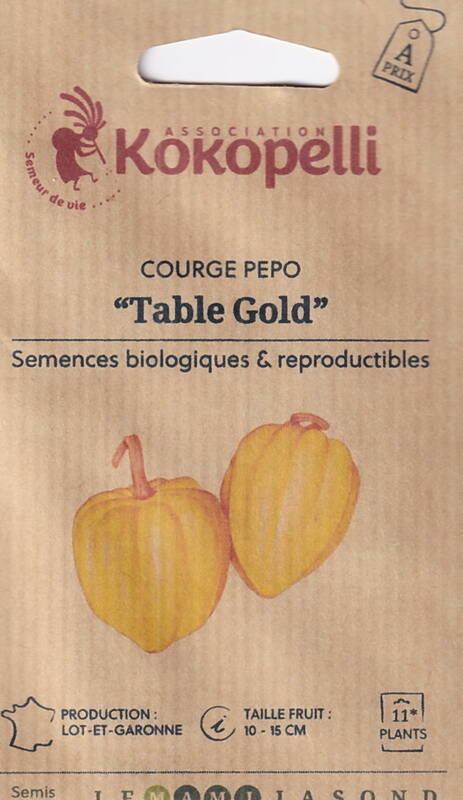
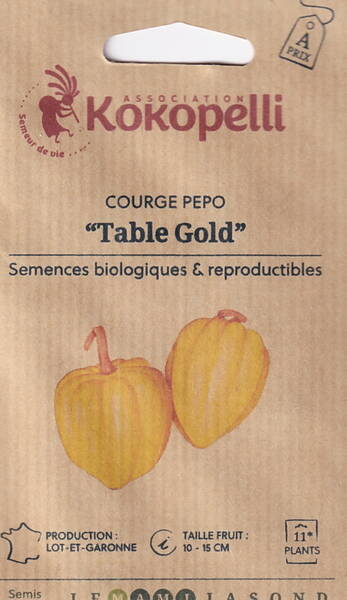
Acorn Squash "Table Gold" or "Jersey Golden Acorn" - Cucurbita pepo var. turbinata.
Sweetish and tender, with beautiful and juicy yellow flesh - simply a gourmet's find!
A mid-season variety with fruits weighing 300–800 g and a diameter of 10–15 cm. Vine length: 150–400 cm.
Upon ripening, it produces 5 to 8 conical orange fruits. Their dense flesh has a nutty flavor that improves with storage. The flowers are also edible.
Fruits can be stored for up to 6 months and contain three times more Vitamin A than other acorn squash varieties.
This winter squash stores well and cooks quickly: if you heat it in the microwave and then finish it in the oven or on the grill with other ingredients, according to your taste and imagination, you can create a Little Miracle.
In cultivation since 1982.
Sweetish and tender, with beautiful and juicy yellow flesh - simply a gourmet's find!
A mid-season variety with fruits weighing 300–800 g and a diameter of 10–15 cm. Vine length: 150–400 cm.
Upon ripening, it produces 5 to 8 conical orange fruits. Their dense flesh has a nutty flavor that improves with storage. The flowers are also edible.
Fruits can be stored for up to 6 months and contain three times more Vitamin A than other acorn squash varieties.
This winter squash stores well and cooks quickly: if you heat it in the microwave and then finish it in the oven or on the grill with other ingredients, according to your taste and imagination, you can create a Little Miracle.
In cultivation since 1982.
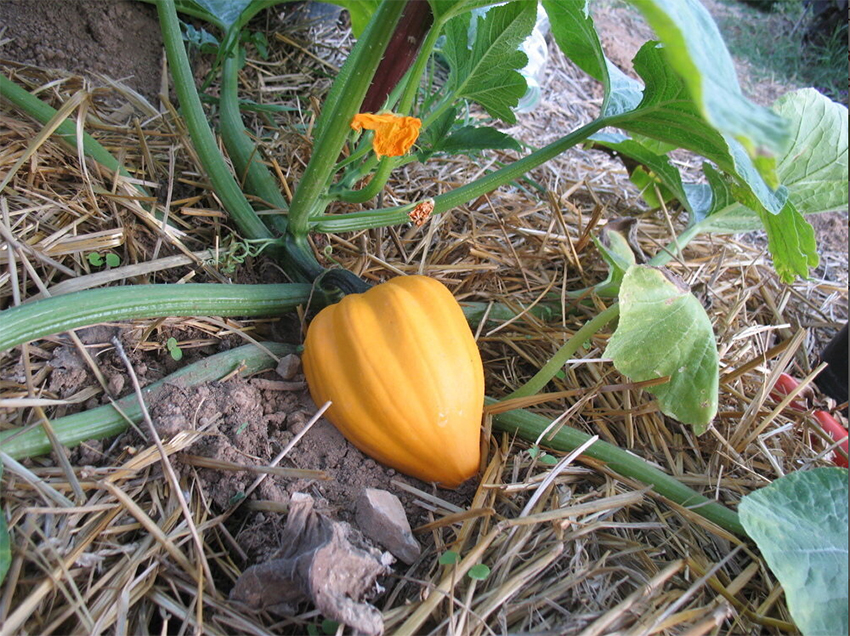
* Like most squash varieties, acorn squash is very easy to grow. Seeds are sown directly into the ground after the danger of late spring frosts has passed (in Estonian conditions, this period falls approximately in mid-to-late May).
Seeds are placed in a hole to a depth of about 2.5 cm. The distance between holes is 90x90 cm.
The planting soil should be well-enriched with organic matter beforehand. In good warm weather, shoots may appear within a week.
Care for these squashes is minimal – watering during dry periods and fertilizing with nitrogen (at the beginning of growth) and complex fertilizer on soils with medium fertility levels.
Acorn squash has a mild buttery taste that pairs well with any spices and sauces, both savory and sweet. This squash is not as rich in beta-carotene as other pumpkin varieties; nevertheless, the fruits are a source of dietary fiber, vitamins C and B, potassium, magnesium, and manganese.
Acorn squash does not have a characteristic pumpkin taste and smell, so it replaces potatoes in many recipes.
Acorn squash can be baked, fried, microwaved, stewed, or steamed. Due to its small size, it can be stuffed with a mixture of cereals (rice, millet, barley), meat, or vegetables.
Acorn squash is simply ideal for stuffing, as the small squashes simultaneously serve as original vessels for the dish.